CISN - How Cancer is Studied - Biospecimen Issues: For Researchers - cont.
| You Are Here: Home > Cancer Research > How Cancer is Studied > Translational Research > Biospecimen Issues For: Researchers - continued | ||
Biospecimen Issues:
|
 |
|
It should be noted that CLIA (Clinical Laboratory Improvement Act) regulations that enforce standard documentation that each clinical laboratory test is performed the same way and that all variables are controlled for, are not required in research labs as they are in hospitals and commercial patient labs.
Biobank Biospecimen Storage
Translational research is facilitated by the collection of human tissue. Therefore biobanks are actively contributing to advances in translational research by offering opportunities to safely collect and store these samples and link laboratory research to clinical practice.
| Section Index | |
| What We Know About Cancer | |
| ● | How Cancer is Studied |
| Drug Development | |
 |
New Treatments |
| Research Advocacy | |
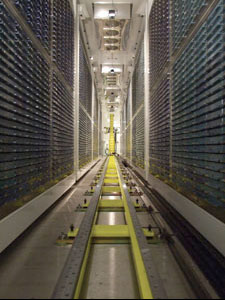
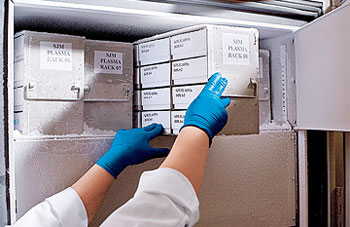
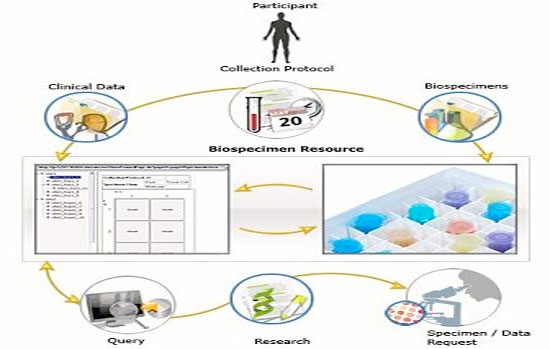
The database, including clinical data, is kept separately with a secure method to link clinical information to tissue samples. Room temperature storage of samples is sometimes used, and was developed in response to perceived disadvantages of low-temperature storage, such as high costs and potential for freezer failure. Current systems are small and are capable of storing nearly 40,000 samples in about one tenth of the space required by a -80 °C (-112 °F) freezer. Replicates or split samples are often stored in separate locations for security. In the news: Biobanks are listed as number 8 in the "10 Ideas Changing the World Right Now" in the TIME magazine issue that hit the news stands March 23, 2009. "Now that major banks in the U.S. are getting by on a government bailout, the idea of creating yet another repository to safeguard your most valuable assets might seem downright ludicrous. And even irresponsible.
Think of it as an organic bank account. You put your biomaterial in and earn medical interest in the form of knowledge and therapies that grow out of that deposit - no monetary reward, just the potential that you might benefit from the accumulated data at some later date. (Sorry, no shiny new toaster to inspire you to open up such an account either - just an appeal to the greater medical good.)" - Quote and image from the Time.com article,
10 Ideas Changing the World Right Now Examples of groups working in the Biobank field: 1) The NCI's Office of Biorepositories and Biospecimen Research (OBBR's) director, Carolyn Compton, M.D., Ph.D., and her staff are currently developing the concept for a new national biobank: a unique, non-profit public resource that will ensure the adequate and continuous supply of human biospecimens and associated measurable, high-quality data, all acquired with the highest ethical standards. For more information: http://plan.cancer.gov/Biobanking.htm 2) The caBIG®Tissue/Biospecimen Banking and Technology Tools Knowledge Center is an NCI-supported entity led by the Siteman Cancer Center, Washington University at St. Louis, MO.
The Knowledge Center provides a centralized, authoritative repository of knowledge, information, and web-based support to facilitate the ongoing development of caBIG® tools, standards, and infrastructure in the tissue/biospecimen management domain. For more information: https://cabig-kc.nci.nih.gov/Biospecimen/KC/index.php/Main_Page 3) Kaiser Permanente has launched a drive to obtain 500,000 volunteers to donate blood and saliva for genetic analysis to study how life style, environmental factors and genes interact to contribute to a range of diseases including cancer. 4) UK Biobank is recruiting up to half a million participants between the ages of 45 and 69 years to contribute blood samples, life-style details and medical histories for epidemiology studies. 5) Biobank Japan is creating a DNA repository of 300,000 individuals. Data Management One of the first steps in ensuring compliance with international best practices requires the adoption of a biobank data management system capable of integrating all the heterogeneous data types associated with a sample in a secure yet accessible manner. Coupled with regulation and administrative requirements is the pressing need to provide a data management platform that readily allows the selection of appropriate patient/sample populations for studies based on heterogeneous search criteria across epidemiological, clinical and omic data domains. Public, academic and private data collection platforms exist today. Ideally, the process of collecting biological specimens should be linked to a database containing clinical information and a tracking system for stored samples. This enables researchers to recover and be aware of the potential development of translational research applications as well as to recover samples needed to develop their projects very rapidly. In this context, it is particularly important to identify samples from patients entering in clinical trials using innovative therapeutic approaches and connect such information with biological and clinical databases. Distribution of Samples
An understanding of the balance that needs to be struck between the interests of society and the rights of individual patients, central to the ethical use of human tissues and the use of clinical outcome information for research, must form the basis for the distribution of any national tissue resource. CISN Summary:We at CISN support the idea that ALL biospecimen data collected with public funds should reside in the public domain in order to best ensure the prompt development from specimen collection to new discoveries that benefit patients.
|
|