CISN - Cancer Survivorship - Wellness Plan
| You Are Here: Home > Survivorship > Wellness Plan |
SurvivorshipIn this section: |
A Wellness PlanOverviewCancer treatments in the United States tend to focus on the disease. Yet it is well documented that cancer develops in and affects the whole person. “Cancer is no simple disease, and effective treatment is not just about killing rogue cells with radiation and chemotherapy.” - “Cancer Care for the Whole Patient: Meeting Psychosocial Health Needs” by The National Academies’ Institute of Medicine, October 2007 This section will discuss the whole person, which includes the following aspects of the self:
Cancer and the Whole PersonOptimizing wellness in the physical body requires attention to more than the disease site. Health occurs in the context of each individual’s physical body, as well as his or her mental, emotional, and spiritual being. The whole person is also associated within the context of home , work, relationships with family and friends, larger community, religion or spiritual practice, activities, and any other components of his or her life. |
| Stages | |
| Relationships | |
| Understanding Emotions | |
| ● | Wellness Plan |
| Follow-up Health Care | |
| Transitions | |
| Workplace | |
|
||
Everyone is unique. You may not feel a need to change anything. Maybe you are just beginning this conversation with yourself or perhaps you have already started to achieve greater wellness. Steps toward greater wellness After dealing with cancer and its treatments, many survivors want to take proactive steps to improve their health, improve the quality and meaningfulness of their lives, and potentially reduce the risk of recurrence. Research indicates there are many steps you can take to improve and maintain your vitality. Taking proactive steps toward your wellness also allows you to focus on areas of your life that you can control after cancer. For some people this is very important; for others, not. The most important measure is how you feel. PhysicalThese strategies impact the physical body, as well as the mental, emotional, and spiritual:
For information about other wellness strategies affecting the physical body, please visit the CISN Cancer 101 Prevention section. |
||
|
||
What to increase in your diet:
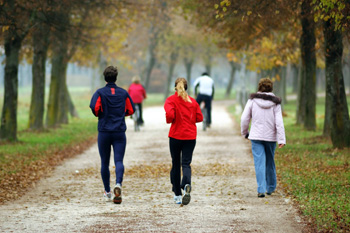
Studies recommend avoiding frying, barbequing, and microwaving due to increased cancer risk from those types of food preparation. Always thoroughly wash your food to remove any surface pesticides and/or contaminants. Try to eat as many organic foods as possible! CISN Tip: Keep a journal and write down how you feel after each meal. Over a short period of time, this practice will reveal trends about what boosts versus lowers your vitality. Go to the National Foundation for Cancer Research (www.NFCR.org) to learn more about food ingredients that help fight cancer. Increase Exercise Moving the body by exercising offers many health benefits against cancer. Exercise also reduces and controls obesity that may be linked with a number of cancers. Is there evidence that exercise reduces cancer? Some research studies indicate that exercise reduces cancer risk and offers health benefits against the disease in those that already have it. Some studies are inconclusive or show no benefit. All studies show that exercise improves your overall health. What are the current physical activity recommendations?“Adults should engage in moderate-intensity physical activities such as brisk walking for at least 30 minutes on 5 or more days of the week.” -Centers for Disease Control and Prevention/American College of Sports Medicine. OR “Adults should engage in vigorous-intensity physical activities such as jogging 3 or more days of the week for 20 or more minutes per occasion. -Health People 2010 |
||
|
||
The BMI is a ratio of height to weight that enables you to determine if you are the correct weight for your height. An Adult BMI Calculator is provided by the Centers for Disease Control and Prevention. Quit or Reduce Alcohol Consumption Having more than two drinks each day for many years may increase the chance of developing cancers of the mouth, throat, esophagus, larynx, liver, and breast. The risk increases with the amount of alcohol a person drinks. For most of these cancers, the risk is higher for a drinker who also uses tobacco Doctors advise people who drink to do so in moderation. Drinking in moderation means:
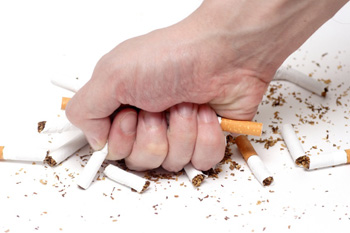
Quit Smoking According to the American Cancer Society, smoking damages nearly every organ in the human body, is linked to many cancers, and accounts for at least 30 percent of all cancer deaths. |
||
|
||
There are many resources to help people stop using tobacco:
Mental and EmotionalSelf-Exploration Because of the intensity of the cancer experience, in which it seems as if their world is turned upside down, some survivors have experienced varying degrees of confusion about themselves and their lives after the cancer diagnosis. For some, cancer raises the question, "Who am I?" Other people just want to finish their treatment and continue on with their life. If you are interested in self-exploration, a helpful resource is Cancer as a Turning Point by Lawrence LeShan, PhD. This book discusses how moving toward a love for life mobilizes the immune system, promotes wellness and may trigger healing. Beyond scientific research into how molecules interact in the biological systems, LeShan emphasizes human action. He also challenges people to search for a lifestyle especially suited for them, and when found, actively work toward living this life. |
||
|
||
"Our actions are usually based on these 'shoulds' rather than on the question of 'what would fulfill me - what style of being, relating, creating would bring me to a life of zest/ love? ' What kind of life would they be living if they adjusted the world to themselves instead of -- as our (cancer) patients generally have done -- adjusted themselves to the world'?" - All quotes are from Cancer as a Turning Point by Lawrence LeShan, PhD. Body/Mind Connection Research has demonstrated the interconnection between the body and mind. Our mental and emotional states influence physical health. This does not mean that your thoughts and feelings created your cancer. It was not your fault. It simply means that you may wish to pay greater attention to the relationship between your physical, mental, and emotional self. |
||
|
||
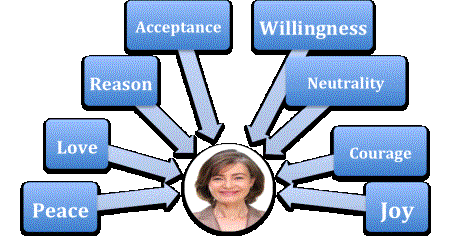
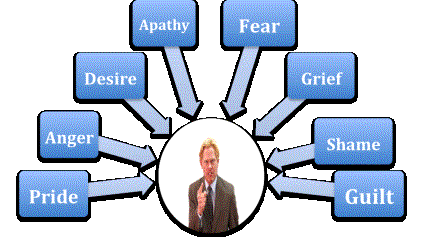
The following emotions may impact your life for better or worse The mind/body connection is like all other aspects of disease and life -- very individual. We all know people who live as if the glass is " half empty " and others who live as if the glass is "half-full". You may want to reexamine how you approach life. Emotions That Promote Wellness Emotions That Detract From Wellness Please remember, we are not doctors and are not making recommendations. Always discuss your concerns and choices with a trained professional. Below is a list of options. CISN Tips:
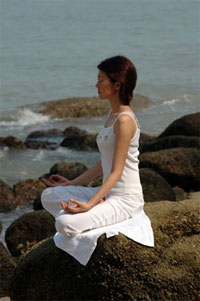
SpiritualSome people affected by cancer report relying on spiritual and/or religious beliefs and practices to help them cope with their disease. Religious Versus Spirituality For many people, spirituality and religion have different meanings.
Spiritual well-being Spiritual and religious well-being may be associated with improved quality of life. It is not known for sure how spirituality is related to health. Some research indicates that spiritual or religious beliefs and practices promote a positive mental attitude and may help a patient feel better. |
||
|
||
Spiritual Distress Spiritual distress is unresolved religious or spiritual conflict and doubt. This distress may contribute to poorer health outcomes. A serious illness like cancer may challenge a person’s beliefs or religious values. This may result in spiritual distress. Some cancer patients may feel that cancer is a punishment by God or may suffer a loss of faith after being diagnosed. Some wonder if their prayers are being answered. CISN Tip: You may want to have an in-depth discussion with a spiritual leader who has helped you in the past. If this person is not helping, it may be time to consider exploring the spiritual guidance and support of someone else. Also for those individuals undergoing spiritual distress, we recommend doing a spiritual self-assessment. |
||
|
||
A spiritual assessment may include questions involving the following issues:
|