
CISN - How Cancer is Studied - Types of Epidemiology Studies - pg. 3
| You Are Here: Home > Cancer Research > How Cancer is Studied > Epidemiology > Types of Epidemiology Studies - pg. 3 |
|||||||||
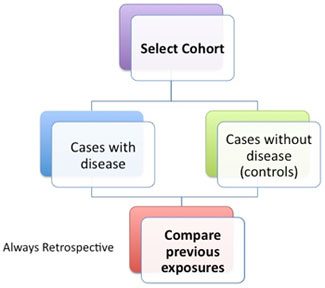
Types of Epidemiology Studies - page 32. Case Control Studies: "Why me" study. In case control studies investigators begin with people who have been diagnosed as having a disease (cases) and compare them to people without the disease (controls). Using data from a variety of sources - personal interviews, medical and hospital records - cases and controls are compared with regard to past exposures in an attempt to identify differentiating factors.
Advantages of case controlled studies: With enough subjects in the study and careful selection of controls, case-control studies provide a cost-effective way to study cancer. |
| Section Index | |
| What We Know About Cancer | |
| ● | How Cancer is Studied |
| Drug Development | |
 |
New Treatments |
| Research Advocacy | |
Disadvantages: As in eyewitness testimony in a courtroom, case-control studies depend on our often unreliable memories.
New scientific developments may help avoid this problem. Biomarkers of dietary intake, which act like fingerprints of the foods we eat regularly, can be utilized vs. relying on faulty memories. Summary of Analytical Study DesignsMost epidemiological studies are described as "hypothesis generating." That is, they identify trends in the general population that then confirm them in carefully controlled experimental settings. The choice among the three types of epidemiological studies always reflects a trade-off among the goals (e.g., explore a single disease or multiple diseases) and the constraints (e.g., time and costs). This chart shows strengths and weaknesses of several types of studies.
|


|