
CISN - The OMICS Revolution and Beyond - Bioinformatics
| You Are Here: Home > Cancer Research > What We Know About Cancer > OMICS Revolution > Bioinformatics | ||||||
BioinformaticsBioinformatics is the field of science in which biology, computer science, and information technology merge to form a new discipline. The ultimate goal of the field is to enable the discovery of new biological insights as well as to create a global perspective from which unifying principles in biology can be discerned.
This genetic data represents a treasure trove for researchers and companies interested in how genes contribute to our health and well-being. Almost half the genes identified by the Human Genome Project have no known function. Researchers are using bioinformatics to identify genes, establish their functions, and develop gene-based strategies for preventing, diagnosing, and treating disease. Why Is Bioinformatics So Important?Major breakthroughs in bioinformatics allow the vast amounts of data that are collected from these studies to be analyzed in a way that clarifies complex patterns. Computers and bioinformatics software are the tools of the trade. |
||||||
| Section Index | |
| ● | What We Know About Cancer |
| How Cancer is Studied | |
| Drug Development | |
 |
New Treatments |
| Research Advocacy | |
The field of bioinformatics has evolved enough so that the most pressing task now involves the analysis and interpretation of various types of data, including nucleotide and amino acid sequences, protein domains, and protein structures. The actual process of analyzing and interpreting data is referred to as computational biology. The rationale for applying computational approaches to facilitate the understanding of various biological processes includes:
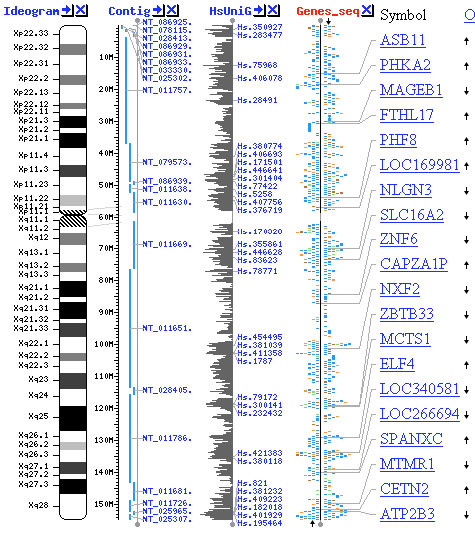
Finding Genes One of the most important aspects of bioinformatics is identifying genes within a long DNA sequence. Until the development of bioinformatics, the only way to locate genes along the chromosome was to study their behavior in the organism (in vivo) or isolate the DNA and study it in a test tube (in vitro).
Protein ModelingThe process of evolution has resulted in the production of DNA sequences that encode proteins with specific functions. In the absence of a protein structure that has been determined by X-ray crystallography or nuclear magnetic resonance (NMR) spectroscopy, researchers can try to predict the three-dimensional structure using protein or molecular modeling. This method uses experimentally determined protein structures (templates) to predict the structure of another protein that has a similar amino acid sequence (target). |
|||||||||||||

1 2 |
|